Driving Global Impact:
Inside Northeastern’s Research Institutes

At Northeastern University, research hubs are designed to address society’s most complex challenges by bringing together faculty, students, industry, and policy leaders across fields and geographies. Each institute is a powerhouse of innovation, aiming to advance solutions in different areas such as enhancing brain health, transforming wireless systems and advancing AI driven robotics to explore quantum materials.
Many institutes are active in Northeastern’s global campus ecosystem, with initiatives rooted in Boston, Oakland, London, Toronto, and Dublin. They serve as collaborative platforms where discovery leads to deployment and accelerating the journey from idea to reality with an impact. While each institute has a specific research mission, all share a common goal to drive scalable solutions with measurable benefit to society.
Let’s explore the dynamic work of these institutes:
Defense Industrial Base Institute
The Defense Industrial Base Institute is working to support the revitalization of America’s maritime and defense industrial base to include guiding the expansion of the manufacturing workforce, identifying base practices in advanced manufacturing, strengthening supply chains, and catalyzing public-private partnerships.

By engaging the higher education sector, government agencies, and industry leaders, DIBI is helping identify real-world gaps in the national capacity to address it naval and defense production needs and devising novel approaches for filling those gaps. In one of its recent efforts with the Department of Navy, the institute is identifying new regional capacities to improve shipbuilding on the Gulf Coast and Great Lakes region. This work is helping decision-makers spot opportunities for investment that will expand commercial and naval production.
Bringing together perspectives from policy, engineering, data science, and community engagement, DIBI turns research into action. At its core, the institute is about building smarter, stronger systems and reinforcing Northeastern’s growing impact in national security and infrastructure resilience.
Institute for Cognitive & Brain Health
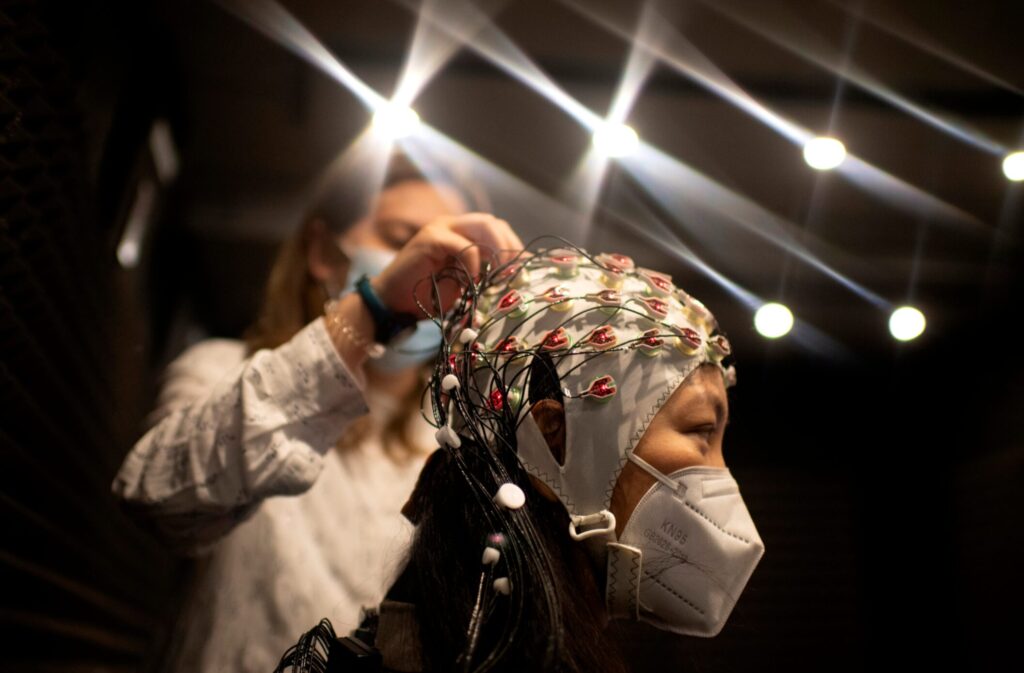
The Institute for Cognitive and Brain Health at Northeastern University investigates the effects of lifestyle choices, events, and health behaviors as well as their physiological sequelae on brain and mental health. We design, implement, and assess various interventions across the lifespan to enhance brain and mental health as well as quality of life both in the United States and across the globe.
Efficacy of these interventions is validated with state-of-the-art neuroimaging techniques, computational models, and sophisticated behavioral paradigms. The overall goal is to align with Northeastern’s mission of truly novel, theoretically motivated, use-inspired research to enhance the mental health of the greater community.
To be a global leader in the development and advancement of scholarship in brain and mental health. Grounded in rigorous interdisciplinary research and innovation, we aim to pursue complex brain and behavioral questions that promote the increased health and effective functioning of individuals across the human lifespan. Rising from our research findings, our goal is to empower students, communities, and policymakers to improve brain and mental health in all individuals. Leveraging cutting edge neuroscience research, interdisciplinary interventions, and transdisciplinary collaborations, we will seek innovative, evidence-based solutions to guide current and future generations to happier, healthier lives.
Learn more
Institute for Experiential Artificial Intelligence
The Institute for Experiential AI (IEAI) at Northeastern University is dedicated to creating artificial intelligence that works for people. With a strong focus on real-world applications, the institute blends cutting-edge research in machine learning with deep expertise in ethics, policy, and design. Its goal is to make AI not only powerful but also transparent, trustworthy, and fair.
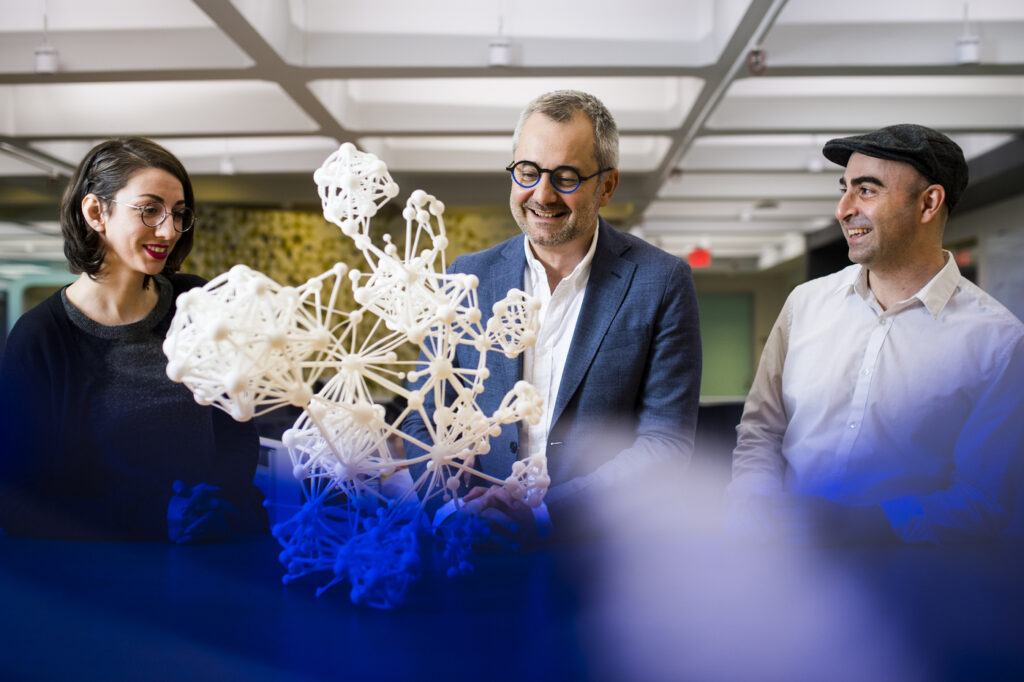
IEAI partners with industry, government, and communities to apply AI in areas like climate resilience, healthcare, and public policy. A notable initiative is the AI for Climate Resilience which uses data and machine learning to improve forecasting and support sustainable planning. Through its AI Solutions Hub and hands-on learning programs, the institute empowers students and researchers to design impactful technologies that reflect human values.
By prioritizing responsible innovation, IEAI is shaping a future where AI enhances everyday life while supporting global challenges in meaningful ways.
Learn more
Institute for Experiential Robotics

The Institute for Experiential Robotics is dedicated to solving problems of global social relevance through the realization of collaborative, adaptive, ethical, and humanitarian robots and robotic technologies. The institute focuses on diverse applications spanning biomedical sciences, manufacturing and automation on the factory floor and in industrial settings, while also advancing the development of new sensors and materials for robotics.
This includes biometric sensors and wearables, alongside research on material properties. Our work includes examining the role of ethics in robotics as it relates to human-robot interaction, as well as deploying robotic technologies in extreme environments including space, polar, and marine settings.
The institute’s comprehensive areas of interest encompass mathematical foundations, formal methods, manipulation, sensors and wearables, computer vision, wearable technologies, operations across space, marine, polar, and ground environments, robotic prosthetics and exoskeletons, human-robot interaction, artificial intelligence and machine learning, dynamics and control systems, and multirobot systems, creating a holistic approach to advancing robotics for the betterment of society.
Learn more
Institute for Mechanobiology
The Institute for Mechanobiology at Northeastern University is dedicated to understanding how physical forces influence biological systems, from cellular behavior to tissue development, aging, and degeneration. By integrating expertise across biology, physics, engineering, and medicine, the institute aims to uncover the fundamental mechanisms that govern how mechanical signals impact human health.
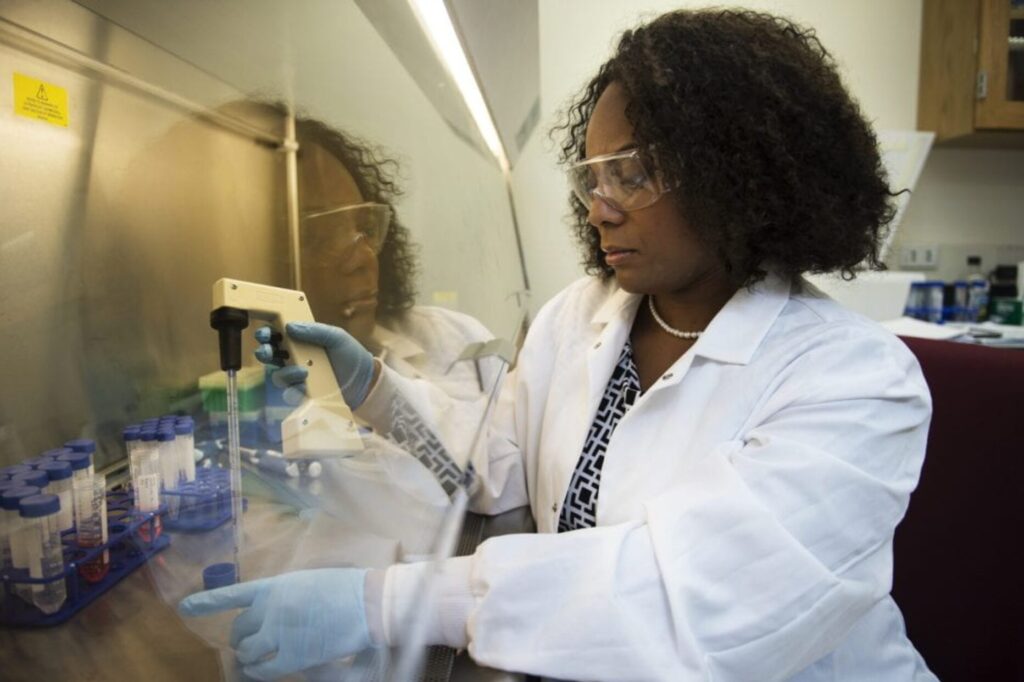
A recent research breakthrough introduced the concept of mechanomemory, demonstrating that cells can retain the effects of physical force even after it is no longer present. This insight opens new avenues for therapeutic strategies targeting degenerative diseases and age-related tissue decline.
IfM’s interdisciplinary research addresses critical areas such as bone regeneration, cardiovascular function, cancer progression, and immunotherapy. The institute combines foundational science with translational innovation to inform the development of next-generation medical treatments.
As one of the only academic institutes solely focused on mechanobiology, IfM plays a leading role in advancing both scientific understanding and practical healthcare solutions.
Learn more
Institute for Intelligent Networked Systems
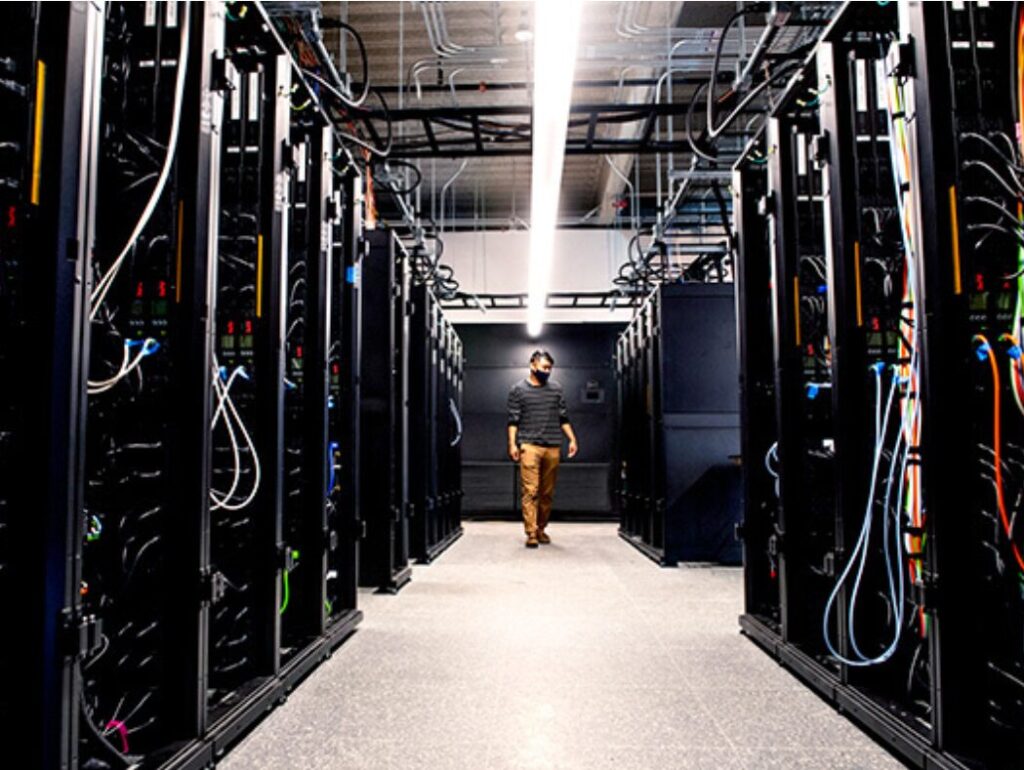
The Institute for Intelligent Networked Systems (INS, formerly Institute for the Wireless Internet of Things/WIoT) is dedicated to advancing the frontiers of networked systems through innovative research, education, and technology transfer. We aim to develop transformative technologies that connect people, devices, and systems intelligently, securely, and efficiently to address global challenges and create societal impact.
INS will conduct cutting-edge interdisciplinary research that bridges engineering, computer science, and business domains in: Communication & Networking Technologies, Intelligent Systems & Computing, Hardware & Physical Systems, and Security & Resilience.
INS has established itself as a leader in the development of next-generation smart, networked, and wireless systems. To advance this position, INS will build complex partnerships with government, industry, and local communities to advance applications in critical domains.
INS will also drive the development of “Spectrum Science” to address the looming spectrum crunch—a critical issue that threatens the future of the wireless revolution and its applications in IoT and robotics. The Institute will pursue an ambitious research agenda focused on “Conquering, Defending, Understanding, Sharing, and Policing the Wireless Spectrum” to unlock the full potential of IoT and connected autonomy.
Learn more
Mills Institute
Rooted in the legacy of Mills College, The Mills Institute at Northeastern University advances educational equity, inclusive leadership, and justice-centered scholarship. The Institute hosts interdisciplinary research initiatives and programs designed to address systemic inequities and elevate historically underrepresented voices across academia and society.

One significant initiative is the Research Justice at the Intersections (RJI) program, which brings together University faculty and external scholars to co-create equity‐focused research. RJI promotes collaborative knowledge production grounded in lived experience and justice frameworks, culminating in a spring symposium and public-facing scholarship.
Through programs such as Innovation Lab Grants, leadership development workshops, and experiential learning opportunities like the Trailblazers and WISE initiatives, the Institute empowers students, researchers, and community partners. Anchored in Northeastern’s broader mission of inclusion and impact, The Mills Institute drives social change through research, education, and community engagement.
Learn more
Institute for NanoSystems Innovation
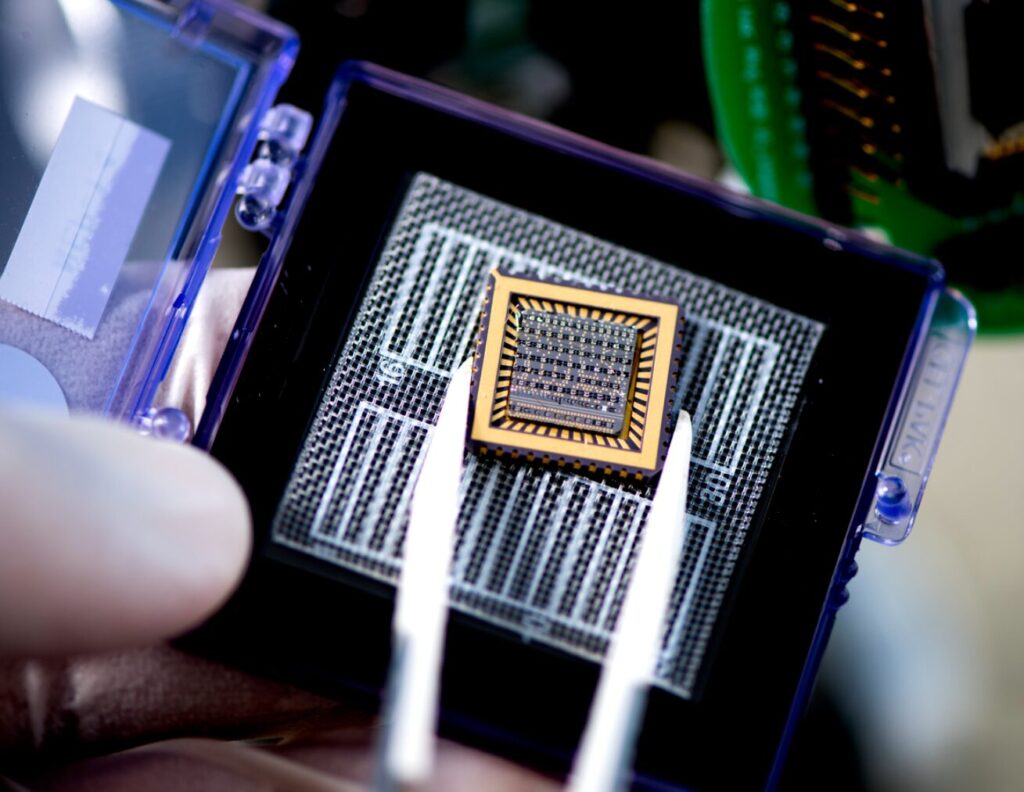
The Institute for NanoSystems Innovation at Northeastern University drives innovation in semiconductors, sensors, and microscale systems by linking research efforts across the Boston and Oakland campuses. Its mission is to accelerate the journey from scientific discovery to functional devices, advancing breakthroughs in nanomanufacturing and AI-integrated hardware.
NanoSI supports rapid lab-to-fabrication workflows through dedicated facilities that promote hands-on experimentation and real-time prototyping. A recent focus includes developing next-generation sensor platforms for environmental monitoring and precision health applications, where speed and sensitivity are critical.
The institute serves as a hub for industry partnerships and interdisciplinary collaboration, training students and researchers in advanced electronics and scalable materials. By uniting expertise in materials science, engineering, and computing, NanoSI empowers innovators to address real-world challenges and bring transformative technologies to market.
Through its experiential model, NanoSI is helping shape the future of nanoelectronics while strengthening Northeastern’s role in the global semiconductor ecosystem.
Learn More
Network Science Institute
The Network Science Institute (NetSI) at Northeastern University is a multidisciplinary community advancing innovative research and education in network science across Northeastern’s global network. NetSI is home to the only PhD program in Network Science in the U.S. and a pioneering new Master’s degree program in Complex Networks Analysis.

Established in 2015, the Network Science Institute is a joint initiative between six academic colleges at Northeastern University — Colleges of Science, Bouvè College Health Sciences, Social Science & Humanities, Khoury College of Computer Sciences, D’Amore McKim School of Business, College of Arts, Media and Design. With central headquarters in Boston, NetSI has established hubs in London and Portland, Maine, and has a growing presence at the Charlotte and Dublin campuses.
NetSI houses multiple lab groups led by core faculty specializing in various focus areas, including brain connectivity, biological interactions, infectious disease modeling, infrastructural resiliency, performance of teams, and the dynamics of information spread and belief formation. Our research and training programs are motivated by a desire to inspire and contribute to the growing community dedicated to understanding networks by discovering the underlying principles, properties and purpose of their connectivity.
Learn more
Quantum Materials and Sensing Institute

The Quantum Materials and Sensing Institute (QMSI) at Northeastern University is accelerating the development of quantum materials and technologies to address real-world challenges in computing, communications, health, security, and sustainability. By converging expertise across quantum theory, advanced materials synthesis, electronics, photonics, magnetics, and machine learning, QMSI is developing breakthroughs that will define tomorrow’s science and technology landscape.
Under the leadership of Arun Bansil, University Distinguished Professor of Physics, QMSI is driving groundbreaking discoveries across multiple frontiers. The institute is developing AI-powered smart laboratories that can run experiments autonomously, dramatically reducing the time and cost of scientific discovery while freeing scientists for creative problem-solving. Materials discovery efforts include finding materials that could help detect dark matter—the invisible material that fills our universe. The institute is pioneering strategies for scalable integration of different types of quantum platforms—combining superconducting circuits, trapped atoms, and solid-state qubits—to create hybrid systems with capabilities impossible using any individual approach. Finally, QMSI is harnessing light-matter interactions to create all-optical technologies that can support the exponentially growing bandwidth demands of our hyperconnected digital society.
QMSI is also building the quantum ecosystem of the future through comprehensive workforce development programs that include a leading role in the Commonwealth’s ‘Quantum Massachusetts’ initiative, strategic industry partnerships that bridge laboratory discoveries to market applications, and innovative global research and education models impossible for traditional single-campus institutions. These efforts have already positioned Northeastern’s Burlington campus as a recognized quantum innovation hub, hosting high-profile delegations from the Department of Defense, UK Research and Innovation, national laboratories, and leading technology stakeholders worldwide.
Learn more
In addition to our ten institutes, we would also like to introduce you to the two Provost Office-affiliated research centers:
Burnes Center for Social Change
The Burnes Center for Social Change at Northeastern University is reimagining how public policy is designed, implemented, and led by putting people and equity at the center of the change. The center partners with governments, nonprofits, and communities to build more inclusive and responsive systems, especially in areas like health equity, civic technology, and climate resilience.

At the heart of its research work is “Link Health”. It is a nationally recognized model that connects patients in emergency rooms to social support services and thus, improving health outcomes beyond the clinic services. The Policy Lab brings students and policymakers together to co-create evidence-based solutions for today’s most complex challenges, while the Pi-Squared initiative explores how innovation can serve the public interest with respect to fields such as ethics in AI and sustainable development.
The Burnes Center helps individuals and institutions build the skills to lead change and become active participants of social transformation through collaborative leadership.
Learn more
Centre for Drug Discovery

The Center for Drug Discovery at Northeastern University is dedicated to transforming scientific discovery into real-world therapies that address some of today’s most complex health challenges. By bringing together experts in medicinal chemistry, pharmacology, molecular biology, and computational science, the center advances a truly integrated approach to therapeutic innovation.
One of its recent breakthroughs is the development of a targeted analgesic designed to manage pain without the risk of addiction offering hope for safer, more effective treatments for chronic conditions.
Through close collaboration with researchers, clinicians, and industry partners, CDD accelerates the path from promising compounds to clinical application.
Grounded in ethical, evidence-driven research, the center’s mission is to improve health outcomes and deliver meaningful change. Its translational workplaces Northeastern at the forefront of next-generation drug development.
Learn more
Each institute plays a unique role in shaping Northeastern’s research identity, one grounded in collaboration, societal impact, and a commitment to building a better future. Whether advancing quantum science or strengthening democratic participation, these institutes are united by a common thread to turn visionary research into real-world solutions. Each breakthrough happens because diverse minds come together around a simple belief: knowledge has the power to build a better world.
At Northeastern, the question isn’t just “What if?” It’s: “How can we make this happen?” And that makes all the difference.

Location
110 Churchill Hall 360
Huntington Avenue
Boston, MA 02115
(617) 373–2000
Do you have questions for the Office of the Provost? Please reach out to us.
QUICK LINKS
CAMPUS LOCATIONS

Today, a vanguard of donors is driving Northeastern’s historic $1.75 billion campaign. With initiatives that span the globe, accelerating outcomes, we’re creating a better world right now. Learn more about our mission